Once operators, always operators. We're industry veterans who break down games, apps, and digital businesses for the people actually building them. Read by 15,000+ industry insiders weekly.
Share
🎮 This Week in Games #402: Kojima - PlayStation + XBOX
Today's newsletter is brought to you by Sensor Tower and Appcharge. More about them later.
Happy Friday, friend! Here's what you ought to know about this week in games:
XBOX picked up what PlayStation dropped. Kojima tells his side of the story. An abrupt Zoom call in June, no real explanation, and a studio suddenly at risk. The story from the other side of the table is likely: the project is late, over the budget, and designed for a niche audience. The real question is, why in the world did struggling XBOX pick this studio up?
AppLovin's CEO is doing the speaker circuit. But why? He sizes mobile game ads at $50B a year, reaching a billion daily players. The comeback is real. The fingerprinting chapter keeps getting skipped.
Playtika is selling its golden goose to get out of crippling debt. Not because of earnouts. Disney Solitaire is a hit, and that hit is exactly why SuperPlay might get sold to Tencent.
Kojima, of Metal Gear Solid fame, got dropped by Sony and picked up by PlayStation. We dived two levels deeper...
Kojima said that "no detailed reason was given". Reports say the studio was over budget, late, and building a niche game. When XBOX picked them up, suddenly it was a transmedia franchise play. This love triangle ends with at least one and most likely two disappointed parties.
Hideo Kojima gave his first interview since the switch of camps, and he didn't mince words. Sony ended Physint funding abruptly on a Zoom call in June with no detailed explanation. Kojima Productions had staffed up around two projects, OD and Physint, and suddenly one of them was gone. He has said openly that the studio faced layoffs and possibly collapse.
The reporting since then points to missed milestones, budget concerns, and potential commercial performance. Physint's potential was linked to Kojima's Death Stranding, which is a beloved fan favorite but sold under 3 million in its first year. That's not the kind of number that buys you an open checkbook on the next one. Physint is still in pre-production and already over the budget. With limited upside, Sony gave the logical response.
The real mystery is why Xbox said yes. Kojima then went the other direction, pitching transmedia expansion to court a bigger budget elsewhere. Sony was evaluating game unit sales. Xbox was buying a transmedia asset. That lines up exactly with what Xbox has been saying all year publicly: the July strategy memo listed growing great games into global franchises and extending them across film, television, consumer products, and live experiences as core priorities. But if Physint is a niche title like Sony projected, there's no transmedia play in the books.
Killing an idea in pre-production means you never find out what it becomes. Judging a seed on a P&L model is how you end up with work that is made to hit a target market and comes out diluted. Death Stranding was a strange game that found a durable audience precisely because nobody sanded the edges off it.
And yet, as a creative, you must complete and release your projects as quickly as possible because finishing clears the path for the next stage of your evolution. If you remain stuck trying to perfect one project forever, you stop growing. Releasing a game allows you to close that chapter, learn from the real world, and step into the next version of yourself.
Kojima released Death Stranding, his last game, in 2019. Physint will likely be out in 2030. That's a decade of not shipping. And then again, Death Stranding was released after his fallout with Konami. Perhaps the fallout with Sony will give this legendary creative the chip on his shoulder to ship his biggest game ever.
AppLovin's CEO Says Mobile Game Advertising Is a $50 Billion Market. He Left One Thing Out.
A 92% stock collapse, a $6 billion buyback, and a rise from $9 to $750. The story is remarkable. The self-belief is unwavering. And yet, the telling of it is selective.
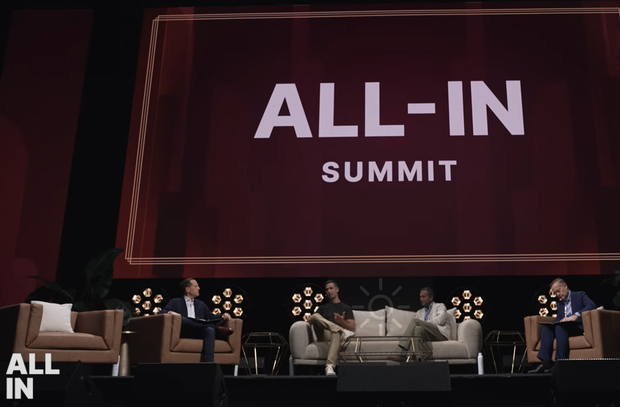
Adam Foroughi spoke at the All In Summit and walked through AppLovin's history, which is worth knowing even if you never touch ad tech. The company IPO'd in April 2021 at a $28 billion valuation, then fell 92% to a $3.8 billion market cap by 2022. Rather than keep pitching investors, Foroughi stopped talking to them and bought back roughly $6 billion in stock while the business kept throwing off cash. Moving the ad model from regression to deep learning, ML1 to ML2, took the stock from $9 to $750 in two and a half years. Q2 2026 adjusted EBITDA margin was 84%.
His headline claim that matters to you: mobile game advertising is a $50 billion annual opportunity reaching over a billion adult players daily. He also confirmed something the industry had long assumed, which is that AppLovin bought game studios primarily to generate training data for its models, then sold them once the models matured. In more detail, the studios were being sold for nearly two and a half billion Dollars and picked up by TripleDot for a third of the price.
The part of the story that did not make it into the talk is fingerprinting. When ATT landed and the whole industry got torpedoed, competitors moved away from fingerprinting because it sat outside Apple's terms of service. AppLovin built Axon 1.0 and then 2.0 on it anyway. That is when the share gains started. The product is real, and the buyback was a bold call on a balance sheet nobody else would have bet on, but the growth story has a chapter in it that keeps getting skipped.
The open question is whether the moat holds. Deep learning plus proprietary data was a genuine edge in 2023. With Meta, Google and Unity's Vector all pushing hard at the same problem, it is less obvious that it stays one. Better competition means better CPIs for everyone else, so it is worth rooting for AppLovin to lose its dominant grip.
What did Adam leave out? The reason he's doing these talks and podcast appearances. The stock is down 50% since the beginning of the year. He's not selling. He's not looking for capital. He's not in a hiring spree. So we assume that talking the company up and raising its profile is intended to lure brands to advertise in games. Meta, brace for impact. Adam took away games and is now gunning for your ecommerce pie.
SuperPlay, built by former Playtika staffers, entered the picture in 2024 when Playtika bought it for $700m plus an earnout of up to $1.25bn. Disney Solitaire launched seven months later and blew through the targets, leaving Playtika ending the year with a $206m GAAP loss for the year. Playtika is booking losses because its new game is a hit. With none of its other games growing, cash fell from $820m to $438m in six months.
With two hit games in three releases, it's clear the team are high-level operators. Disney Solitaire is Domino Dreams, their previous release, reskinned as cards: a game the team already understood, turbo-charged with an IP that fits the Solitaire audience.
They've also tuned the game in a number of smart ways. Firstly, the economy. Solitaire games run like a casino table: players put coins down to start each level, then win a slice back. Grand Harvest, Playtika's own former genre leader, tuned that machine for extraction: one bet's worth of coins released into the economy per hour, and difficulty set to an uncomfortable squeeze. Disney Solitaire turned the dial the other way. Coins start out generous and difficulty rises slowly, like a match-3 funnel with a deck of cards, which lets cohorts stack and monetisation turn up as players get deeper into the game.
Another thing SuperPlay borrowed from puzzle is pace: complete a scene, it animates quickly and players are back to a level, keeping them where the money is. They also brought a modern live ops schedule to the genre, high tempo (610 event instances in 90 days against Grand Harvest's 392), with a different temperament: Disney's calendar is streak-heavy, with a win-streak event live almost every day, while Grand Harvest's is focused on sales, with a quarter of its calendar given over to coupons and store offers.
Playtika's owner, the Giant Network consortium, has a tough decision: keep SuperPlay and let the earnout drain the cash that should be paying down the debt, or sell it to Tencent, fix the balance sheet in one move, and give up its only growth engine. When every financial year starts $200m in the hole, selling the golden goose you caught last year for a massive profit could be the logical move.
Seven years ago they took $2.8bn out of Playtika. The debt that was left behind may now be the reason they sell the only part of the company that's working.
$30B across PlayStation, Xbox and Steam last year. How do you get a slice?
Sensor Tower's 40-page Premium PC/Console Deep Dive breaks down leaderboards, genre share, launch timing, and creative length by channel, plus case studies on Resident Evil Requiem and Battlefield 6.
Appcharge is your proven partner. $1 billion + in transactions processed across top titles. No platform middlemen. No fragmented handoffs between payment vendors. No watching your LTV models fall apart because you don't own the checkout experience.
Own your players. Own your revenue. Own your economics.
Once operators, always operators. We're industry veterans who break down games, apps, and digital businesses for the people actually building them. Read by 15,000+ industry insiders weekly.
🎉 Upcoming Events 🎉 Roundtables: San Mateo - October 19 Supper Club Cyprus: Cyprus - October 26 The Padel Club: Cyprus - October 27 Today's newsletter is brought to you by AppsFlyer and Heroic Labs. More about them later. Correction from last week: we said Kojima hadn't shipped a game in a decade. He has. Death Stranding 2 came out in 2025 and sold 2.5M copies, vs. 1.9M for the original. Thank you for raising this. Happy Friday, friend! Here's what you ought to know about this week in games:...
Happy Friday, friend! Here's what you ought to know about this week in games: Blizzard announced four years of games in one night: three versions of WoW, Diablo 5 in 2029, and a StarCraft open-world shooter in 2030. Roblox expands outside Roblox. Standalone games, browser play, offline mode, and a creator debit card could turn the platform into an engine rather than a destination. FunPlus expanded from mobile to PC and is, low-key, crushing it. The company you know for chart-topping 4X...
400 Episodes. 8 Years. Thank You. Mishka's letter of gratitude on behalf of our present (Jen, Eric, Phil, Adam, Josh, Laura) and past TWIG hosts (Ethan Levy, Eric Seufert, and Joseph Kim) On July 17th, 2018, Joseph Kim and I recorded the first episode of This Week in Games (TWIG). It was unlistenable. And yet we continued recording TWIGs. This weekly ritual of public humiliation caused Eric Kress to join by episode 12. He says he did it to stop the two of us from embarrassing ourselves in...