Once operators, always operators. We're industry veterans who break down games, apps, and digital businesses for the people actually building them. Read by 15,000+ industry insiders weekly.
Share
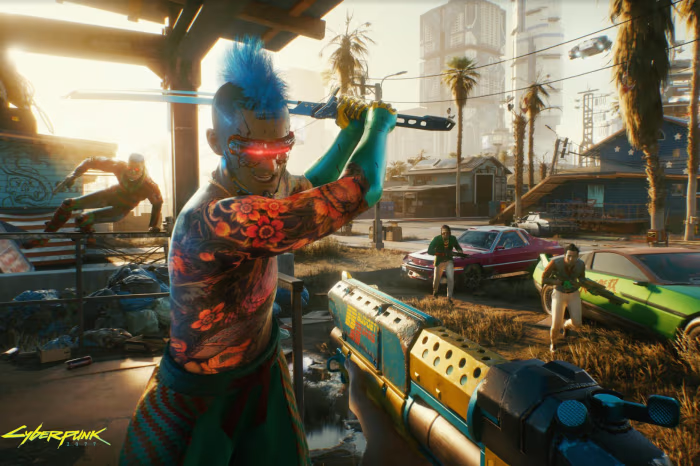
🎮 Cyberpunk 2077 and the Worst Week of His Life
Published 2 months ago • 9 min read
Why None of Us Saw Cyberpunk Coming Apart
Michal Nowakowski on the week Cyberpunk 2077 broke, the deal that built CD PROJEKT RED, and why Poland's advantage isn't what he says it is…
Michal Nowakowski joined CD PROJECT RED over two decades ago in 2005 and is now its joint CEO. In December 2020, he ran business development and investor relations, which means when Sony pulled Cyberpunk 2077 from the PlayStation Store, he was the one taking the calls. At 1am. He reminisces about that time as one of the three worst weeks of his life. Not of his career. His life.
Listen to the full conversation on Deconstructor of Fun
I expected a redemption story. Instead, I got a precise diagnosis of how a studio that had shipped three games above all expectations shipped the fourth badly, why most of the popular explanations are wrong, and what makes the Polish game development ecosystem perhaps the best in the European Union.
The popular theory is wrong. The truth is more interesting.
Three years after one of the worst launches in the industry's history, Cyberpunk 2077 has sold 25 million copies and won a major award.
Start with the theory everyone reaches for. CD PROJEKT REDis listed in Warsaw, the market had priced Cyberpunk as a certainty; the game shipped 13 million copies in ten days and then got pulled from a first-party storefront. The stock fell roughly 75 percent from its peak. The obvious conclusion is that public market pressure pushed a game out before it was finished.
Nowakowski rejects it outright. A lot of people say the investors pressed us to release, he told me, and that is simply not true. His argument is that the board had the flexibility to move the date, and that investors are rational. They want good results rather than early ones. He offers no alternative villain either. We should not have pushed the button to release it.
The pressure theory is convenient. It lets a management team be a victim of its shareholders. He would not take it, and I believe him, because what he blames instead is harder to admit.
Poland was in full lockdown from March 2020. Office work was effectively forbidden. Several hundred developers finished one of the most complex open-world games ever attempted over Slack and video calls.
What that cost is the most important thing he said in the podcast: after launch, people came forward saying they had known about this problem or that one, but there was nobody who seemed to see the whole picture.
“ There was nobody who actually seemed to see the whole picture (everyone was working remotely for the first time due to lockdowns). Everyone saw bits and pieces. Nobody actually came up and said: we’re the Titanic in this movie, so let's not do this. We are heading for an iceberg.”
That is the failure. Not crunch, not greed, not a broken engine. A game at that scale is an integration problem, and CD PROJECT RED was still running a waterfall pipeline where art, audio and tech worked in relative isolation and got assembled late. That model worked perfectly in Witcher 3, when everyone is in one building and someone senior walks the floor and notices the seams. Remote work did not make anyone lazy. It removed the people who could see the whole board.
The second failure was pattern matching. They knew there were bugs, and they benchmarked them against Witcher 3, which also launched rough and got cleaned up inside a month. They budgeted a week or two of patches. What they actually had was a memory architecture that did not fit on a PlayStation 4.
Here’s a myth worth killing: The move to Unreal 5 was not a consequence of Cyberpunk. Nowakowski was clear that their internal REDengine was not the problem; the failure to solve specific streaming and memory constraints before launch was. The switch came from Epic's Matrix demo and the realization that the company never wanted to be in the technology business.
There are real process changes, and they are less quotable and more impactful: First is that milestones are now binary. Ninety percent alpha is not alpha. It’s a fail, everyone knows why, and it gets fixed. Second is that development targets all three platforms from day one instead of building on PC first and scaling down.
What redemption actually cost
The part of this story that I love is that they never cut losses. No pivot, no restructuring, four years of patches, a 10 million unit expansion, and a game that has since sold past 30 million copies.
Nowakowski deflates the romance himself. They knew the game (design) was good and that the technical problems were the issue. The main question was “can we afford (financially) to keep going (fixing a shipped game)?”. The answer was yes, let's go. The 13 million units that sold at launch ended up funding the repair. He says plainly that if the game had been a commercial flop, they would have done what any business does. Moved on.
So the lesson is not “never give up”. It is that a botched launch with real demand underneath it is a completely different thing from a botched launch of a game nobody wanted. Tenacity is a decision you get to make when you are solvent. Anyone reading this as permission to keep funding a project the market has rejected has read it backwards.
The better motive is the one Michal added at the end, almost as a correction. It was not only about the fans. The team had spent years on something they believed was special, and the creators refused to let it go down in history as a failure. I'm not sure that's humble. I think it's actually quite the opposite.
Transmedia, and two ways it can go wrong…
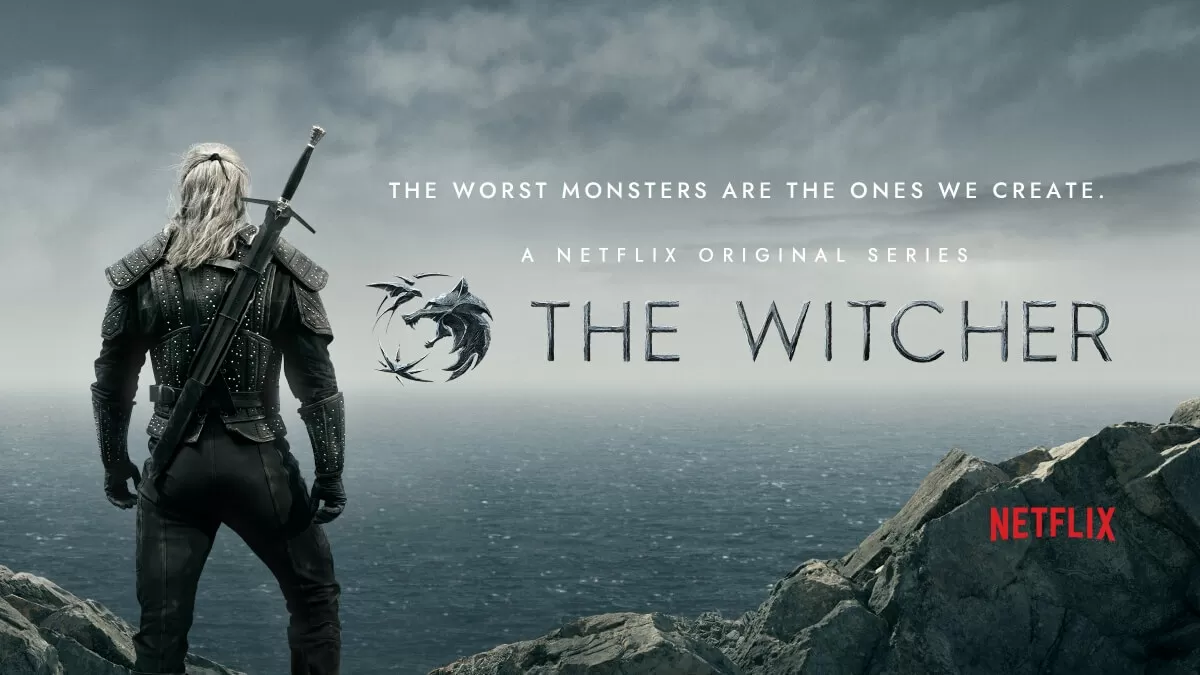
The Witcher on Netflix is not CD PROJECT RED's show. Sapkowski, author of Witcher, never sold them television rights. The studio that made the franchise renown around the world controlled none of the creative, none of the casting, none of the decisions that eventually split the fanbase.
Most studios today talk about transmedia as an upside story. CD PROJEKT RED is the rare case where you can watch both failure modes play out inside one company, and neither is the one people expect.
The first is owning the IP but not the adaptation. The Witcher on Netflix is not CD PROJECT RED's show.
Sapkowski, author of the Witcher, never sold them television rights, so the single largest audience event in the franchise's history was grabbed by a different party entirely. CD PROJECT RED exchanged Easter eggs, collaborated at the margins, and took an enormous sell-through spike on games it had built years earlier. But it controlled none of the creative, none of the casting, none of the decisions that eventually split the fanbase. That is a windfall instead of strategy. You cannot plan a decade around a show you do not own, and when that show declines in quality you absorb the brand damage.
Edgerunners is the counterexample and the actual template. They wrote it, they financed it with Studio Trigger, they controlled the release timing against a game they were trying to rehabilitate. It worked as a piece of television and it moved units. The difference between the two projects is not quality or audience size. It is whether the company had a seat at the table.
Cyberpunk: Edgerunner was financed and fully controlled by CD PROJEKT RED.
The second failure mode is the Disney one, and I’m being very liberal in referring to Disney’s operating model as a failure. What I mean is, a media company builds a flywheel; the flywheel starts generating more margin than the thing at the center of it, and the center goes hollow.
He would not criticize Disney directly, but he did not dispute the pattern either. His answer was structural: CDPR’s management board sets a handful of annual priorities, and game development is always at the top of the list, on purpose, as a reminder.
The numbers still make that easy. Merchandising is in the tens of millions lifetime against games in the billions. The test comes when a licensing line generates enough margin that someone senior starts defending it in a planning meeting. I don’t think Disney decided to become a parks company. It drifted there one reasonable quarter at a time.
What holds it together for now is refusal rather than ambition. Three IPs, not ten. Nowakowski was explicit that the way to grow is to be better with every game, and that ten franchises is not growth.
He also has an honest ordering: Witcher 4 is deep in production, Cyberpunk is in pre-production, and Project Hadar is only just leaving IP construction. That is one full-speed project, and two staged behind it, which is a very different thing from three parallel bets.
Hadar is the real test of whether any of this is a repeatable capability. Witcher came from novels. Cyberpunk came from a tabletop game. Both arrived with a world, a tone, and a built-in audience. Hadar has none of that, and CD PROJECT RED now has to build a universe from nothing while simultaneously proving it can run a franchise portfolio. Those are two hard problems that the company has never attempted at the same time.
Which is where I would flag the risk. Witcher 4, Cyberpunk 2, Hadar, comics, animation, a live-action project, and external partners working on licensed CD PROJECT RED IP under supervision is materially more surface area than the company carried in 2020. That was the year nobody could see the whole picture. The fix they implemented, binary milestone gating and managers back in the building, addresses visibility inside a single production. It does not obviously address visibility across six of them.
Two of CD PROJECT RED's three universes came with the audience already attached, which means nobody, including the company, knows whether the last twenty years were world-building or exceptional adaptation. Hadar answers that. Get it wrong, and they remain an exceptional studio that needed someone else's creative spark to light the world on fire. Get it right, and they become one of maybe five companies on earth that can manufacture a franchise. If you ask me, it’s a bet worth taking.
“Nothing is granted” is a line I keep coming back to
We like to sort conviction from delusion after the fact, then write the story backwards as though the leaders knew exactly what they were doing. Often, they did not, at least fully.
Nowakowski was hoping for three million units on Witcher and privately guessed six lifetime. They hit six in six weeks. The man who was an essential part of a team that built one of the most valuable IP portfolios in Europe was off by an order of magnitude on their own breakout, and he says the anxiety never left. That is not false modesty. It is the correct read on how little anyone can see, even from inside the building.
Which is why the line I keep returning to is not about strategy at all. “Nothing is granted”. Michal said it four or five times without prompting, in a conversation where he had every excuse to take a victory lap.
The way I see it, the most durable asset CD PROJECT RED built was not the IP, the engine, or the transmedia team. It was an institutional refusal to feel safe. That is also the asset with a shelf life because it lives in people rather than the process, and those people eventually leave.
Then again, that is what Project Hadar is for. Building a universe from nothing is the one project that cannot be done by people who feel safe, which means CD PROJECT RED has handed itself the problem most likely to reinforce its culture.
Full conversation with CD PROJECT RED's Michal Nowakowski: APPLE / 🎧 SPOTIFY / ▶️ YOUTUBE
Gram Games used Heroic Labs to tailor offers and events by player cohort, calling it "critical" in a post-IDFA world where retention is everything. Read how Gram merged personalization and advanced social features into a core system of their live operations.
Appcharge is your proven partner. $1 billion + in transactions processed across top titles. No platform middlemen. No fragmented handoffs between payment vendors. No watching your LTV models fall apart because you don't own the checkout experience.
Own your players. Own your revenue. Own your economics.
McKinsey, the United Nations, Skype, Rocket Internet, Facebook, King. Then Akin Babayigitco-founded Tripledot, spun out Luna Labs, and now runs Arcadia Gaming Partners, a $100M fund he deploys alone. He left Türkiye at sixteen and never moved back, which makes him one of the few people who can talk about Istanbul as both an insider and an outsider. We get into how the ecosystem was built, why Sidar Şahin still shapes it years after disappearing, why payback windows are the wrong lens, and what he told a room of Turkish founders that they did not want to hear.
Once operators, always operators. We're industry veterans who break down games, apps, and digital businesses for the people actually building them. Read by 15,000+ industry insiders weekly.
Hello friend, Every story this week sets conviction against evidence. Sands had the conviction to fund 440 people and no proof that a game would hold players. Brussels has conviction about harm to children and no data on the age split. Developers are convinced AI is hurting them and yes use it more than ever. The one company in this issue that runs on evidence keeps an unprecedented 84% margin. Conviction is what gets you started. It’s the evidence that decides who is still standing when the...
Happy Friday, friend! Four countries in seven days, and somewhere between a boarding gate and a hotel lobby, I missed the TWIG recording once again. So I did what our listeners do and watched it. Jen, Kress, Laura Taranto, and Josh Chandley brought the insights with the fund in the latest episode. Four stories stuck with me: Roblox beat their number, and yet the stock went into another free-fall Block Blast, one of my favorite mobile games, has been lying to us about ads Anthropic added two...
TWIG #407: Roblox's Steal Economy, Tim Sweeney Goes All In on AI while Xbox Loses Its COO For maximum insight and entertainment, watch the full TWIG podcast with hosts Jen Donahoe, Eric Kress, Phillip Black and guest host Adam Telfer (YouTube / Apple / Spotify). Happy Friday, friend! Mishka here. I skipped this week’s recording for a padel courts and dinners in Limassol and Tel Aviv. It's truly heartwarming to see you, our readers and listeners from around the world, in real life. Jen...