Once operators, always operators. We're industry veterans who break down games, apps, and digital businesses for the people actually building them. Read by 15,000+ industry insiders weekly.
Grand Slam Cologne Padel "Tournament": Cologne - August 25
Skip the panels. Skip the pitches. Come play padel with the sharpest people in gaming at Gamescom. No experience needed, just good company and better vibes.
Welcome to This Week in Games, by Deconstructor of Fun's Editor, Aylin.
Think of it as your Friday kahve with the sharpest gaming minds in the room. Ground in Athens, brewed in Istanbul, and enjoyed around the world - without sugar.
Playtika's Biggest Problem Isn't What It Paid. It's What It Already Owned.
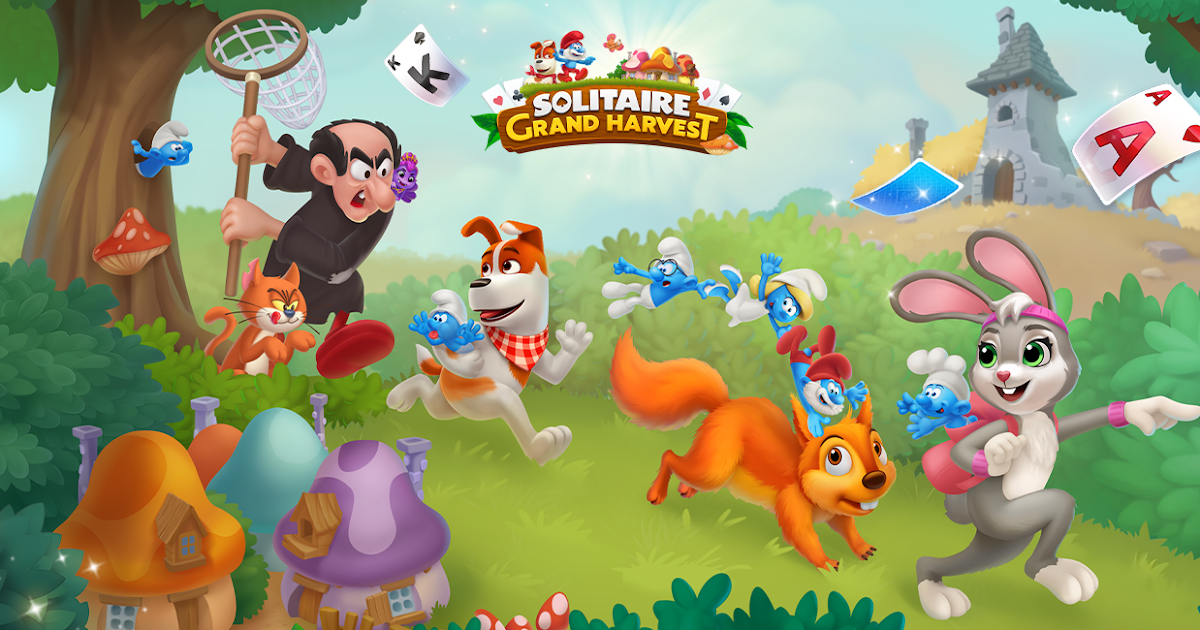
Disney Solitaire is eating Solitaire Grand Harvest alive, and nobody seems to have seen it coming.
Last week we talked about Tencent potentially acquiring SuperPlay from Playtika for $1.5 billion. This week there's more to the story, and it's worse. When you look at Playtika's full portfolio since Disney Solitaire launched, Solitaire Grand Harvest, which was the company's main casual cash cow, is down almost 50% in the first six months of 2026. Not a small dip. Half the revenue, gone. And the wider portfolio outside of SuperPlay is down 35% year on year.
The short version: Playtika paid $700 million upfront for SuperPlay, with up to $1.25 billion more in earnouts tied to revenue targets. SuperPlay crushed those targets by 67% thanks to Disney Solitaire blowing up. So the earnout kicked in at levels Playtika's balance sheet couldn't absorb. They suspended their dividend. They paid out $461 million already and still owe $829 million more. All while their existing games are cratering.
The part that's hard to understand is how nobody saw the cannibalization coming. If you're acquiring a solitaire game to sit inside a portfolio that already has a top-grossing solitaire game, the overlap question has to be part of the diligence.
Net-net: SuperPlay's founders (and their bankers) got a great deal. They sold once to Playtika, and if Tencent comes in, they might effectively sell twice. The whole thing is a case study in how a deal can look brilliant and fall apart because it's too brilliant.
And when it rains, it pours. Washington State is now suing Playtika and Aristocrat to shut down 16 casino apps and recover $225 million, arguing that free-to-download games with virtual currency that can never be cashed out are effectively gambling. This is a legal battle that could take years, but the underlying question it raises applies to almost every free-to-play game on the market. If the "you can't cash out" defense ever falls, the knock-on effects for the whole industry would be significant.
Mobile IAP revenue was down just 2% year on year, which sounds fine until you see that downloads fell 12%. More money chasing fewer installs is the story. Ad spend went up 8%, and ad impressions went up 14%, which means publishers are paying more to reach a smaller pool of people every quarter. That's not a blip. That's the market tightening, and it's been happening for a while.
The genre picture is interesting. Strategy, which has been the dominant revenue category thanks to the 4X boom, slipped 5% year on year. Puzzle rose nearly 20%. The gap between the two has narrowed from roughly $3 billion to about $1.2 billion. Block Blast has the best D180 retention of any tracked title, ahead of even Royal Match. Last War, which generates huge revenue in the short term, is nearly gone by D180. The pattern is clear: the genre with the best retention is gaining ground, and the one built around big early spend is showing signs of a ceiling.
One of the most important charts in the whole report is the ad network breakdown. AppLovin and AdMob combined now control 65% of global gaming ad revenue. AppLovin leads at 36%, AdMob at 29%. Eighteen months ago that combined number was 61%. Two companies controlling two-thirds of your UA marketplace is not a competitive market. Publishers negotiating acquisition rates are increasingly talking to two counterparties instead of ten. That is why CPI is going up, and it's a structural problem that Meta, Unity, Moloco, and everyone else competing in this space has an interest in solving.
The D2C angle adds one more layer of complexity to all of this. US Casino IAP dropped $648 million, the single biggest genre decline in the whole report, and Sensor Tower attributes part of it to spend shifting to direct-to-consumer channels. Roblox mobile IAP is down 29%. MiHoYo is down 24%, with 57% of its US revenue now running through webstores. The broader decline in IAP might not be as bad as it looks, because some of what's disappearing from Apple and Google's books is just moving somewhere those books can't see yet.
Warframe, a 13-year-old Game, Just Had Two of Its Best Years Ever
Daily events. Weekly traders. Seasonal content. Major expansions twice a year. The live service playbook that actually worked while Bungie was running an expansion model.
The comparison with Destiny is almost too easy at this point, but it's worth making clearly. Destiny was acquired by Sony for $3.6 billion to teach the platform how to run live services. Bungie's team has been cut to a fraction of what it was. Marathon is the only bet left. Warframe, built by a studio a fraction of Bungie's size, has been running a genuinely successful live service since 2013 and is growing.
The reason isn't complicated. Warframe is built around a recurring reason to log in. Daily sorties. Weekly traders. Seasonal Nightwave passes. One or two major expansions per year on top of all of that. Players had a schedule and the game kept to it. The monetization is pay-to-progress rather than pay-to-win: skip crafting queues, buy inventory slots, buy resource boosters, purchase finished items from other players. Nothing that breaks the game for people who don't spend, but plenty of reasons to spend if you want to move faster.
Destiny ran an expansion model. You waited for the next big drop, you played it, you waited again. That is a fundamentally different relationship with your player base and a fundamentally different revenue structure. It works great for a game on its way up. It does not build the engagement floor you need when the genre gets competitive. Warframe built that floor and kept reinforcing it. The studio now has over 500 staff and expects to grow by a few hundred more over the next five years, with Warframe and Soulframe as two distinct pillars. That is what a healthy live service looks like from the outside.
Gram Games used Heroic Labs to tailor offers and events by player cohort, calling it "critical" in a post-IDFA world where retention is everything. Read how Gram merged personalization and advanced social features into a core system of their live operations.
Appcharge is your proven partner. $1 billion + in transactions processed across top titles. No platform middlemen. No fragmented handoffs between payment vendors. No watching your LTV models fall apart because you don't own the checkout experience.
Own your players. Own your revenue. Own your economics.
The team breaks down Bungie's latest wave of layoffs, why nearly half the studio was cut, and whether Sony's original live service strategy has completely fallen apart. They also discuss why the acquisition never made sense, Destiny's gradual decline, Marathon's uncertain future, and what happens to hundreds of talented developers in today's struggling games industry.
Puzzle Monthly #5: The Secret Behind Toon Blast's Success
Once operators, always operators. We're industry veterans who break down games, apps, and digital businesses for the people actually building them. Read by 15,000+ industry insiders weekly.
🎉 Upcoming Events 🎉 Roundtables: San Mateo - October 19 Supper Club Cyprus: Cyprus - October 26 The Padel Club: Cyprus - October 27 Today's newsletter is brought to you by AppsFlyer and Heroic Labs. More about them later. Correction from last week: we said Kojima hadn't shipped a game in a decade. He has. Death Stranding 2 came out in 2025 and sold 2.5M copies, vs. 1.9M for the original. Thank you for raising this. Happy Friday, friend! Here's what you ought to know about this week in games:...
🎉 Upcoming Events 🎉 Roundtables: San Mateo - October 19 Supper Club Cyprus: Cyprus - October 26 The Padel Club: Cyprus - October 27 Today's newsletter is brought to you by Sensor Tower and Appcharge. More about them later. Happy Friday, friend! Here's what you ought to know about this week in games: XBOX picked up what PlayStation dropped. Kojima tells his side of the story. An abrupt Zoom call in June, no real explanation, and a studio suddenly at risk. The story from the other side of the...
Happy Friday, friend! Here's what you ought to know about this week in games: Blizzard announced four years of games in one night: three versions of WoW, Diablo 5 in 2029, and a StarCraft open-world shooter in 2030. Roblox expands outside Roblox. Standalone games, browser play, offline mode, and a creator debit card could turn the platform into an engine rather than a destination. FunPlus expanded from mobile to PC and is, low-key, crushing it. The company you know for chart-topping 4X...